Quick Answer: Study abroad and exchange students should lock in housing before they fly, because F-1 and J-1 rules only allow entry up to 30 days before the program start date. Start your search three to four months out, compare furnished off-campus options, verify the property with a live virtual tour, and sign a lease before paying anything.
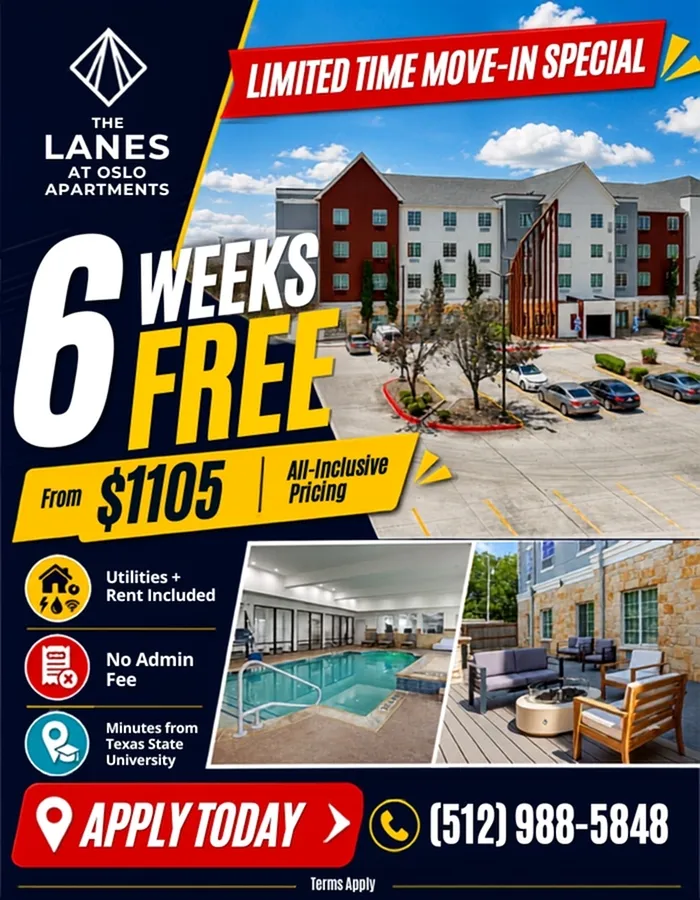
Thirty days. That's the most time federal rules give new international students between landing in the U.S. and their program start date, and it disappears fast. For study abroad and exchange students heading to Texas State University, sorting out a place to live from overseas is the one task that makes every other arrival step easier. The Lanes at Oslo in San Marcos serves students and renters who want that piece settled before the plane takes off.
What Is Study Abroad Housing, and When Should You Book It?
Study abroad housing is any residence you secure for the length of a semester or academic year in another country, from a university residence hall to an off-campus apartment or a homestay. For students coming to the U.S., the smart window to book is three to four months before departure, once your I-20 or DS-2019 is in hand.
The 30-Day Arrival Window
The Department of Homeland Security's Study in the States guide says F-1 students and their dependents may enter the country up to 30 days before the program start date listed on Form I-20. The State Department applies the same limit to exchange visitors: J-1 participants may not arrive more than 30 days before the start date on their DS-2019.
Here's the catch. DHS describes that pre-program stretch as the time to settle in, find a place to live and open a bank account, according to its SEVIS program dates explainer. Spend those weeks apartment hunting and you'll have little left for orientation, a phone plan, groceries and learning your bus route.
Why Booking Before You Land Pays Off
A confirmed address simplifies a lot. You can give your school a U.S. address early, ship boxes ahead, and plan a single trip from the airport to your front door instead of a week of hotel nights. It also removes the pressure that pushes newcomers into a rushed, unseen lease.
How Do International Student Housing Options Compare?
International student housing in the U.S. usually falls into four buckets. Each one trades flexibility against independence and setup effort, so the right pick depends on how long you're staying and how much furniture you want to buy.
| Option | Typical Term | Furnishing | Booking From Abroad | Best For |
|---|---|---|---|---|
| On-campus residence hall | Academic year or semester | Basic furniture provided | Through the university portal | First-year students who want a built-in community |
| Off-campus student apartments | Often 9 to 12 months or longer | Unfurnished or furnished, depending on unit | Virtual tour plus online application | Year-long students who want privacy |
| Homestay | Flexible, often semester-based | Furnished room in a family home | Through a program coordinator | Language learners who want cultural immersion |
| Short term student housing (sublets, extended stays) | Weeks to a few months | Usually furnished | Higher scam risk, verify carefully | Single-semester exchange stays |
| Takeaway | Match lease length to your DS-2019 or I-20 dates | Furnished saves setup time | Verify before you pay | Depends on stay length |
Fully Furnished Apartments vs. Bringing Your Own
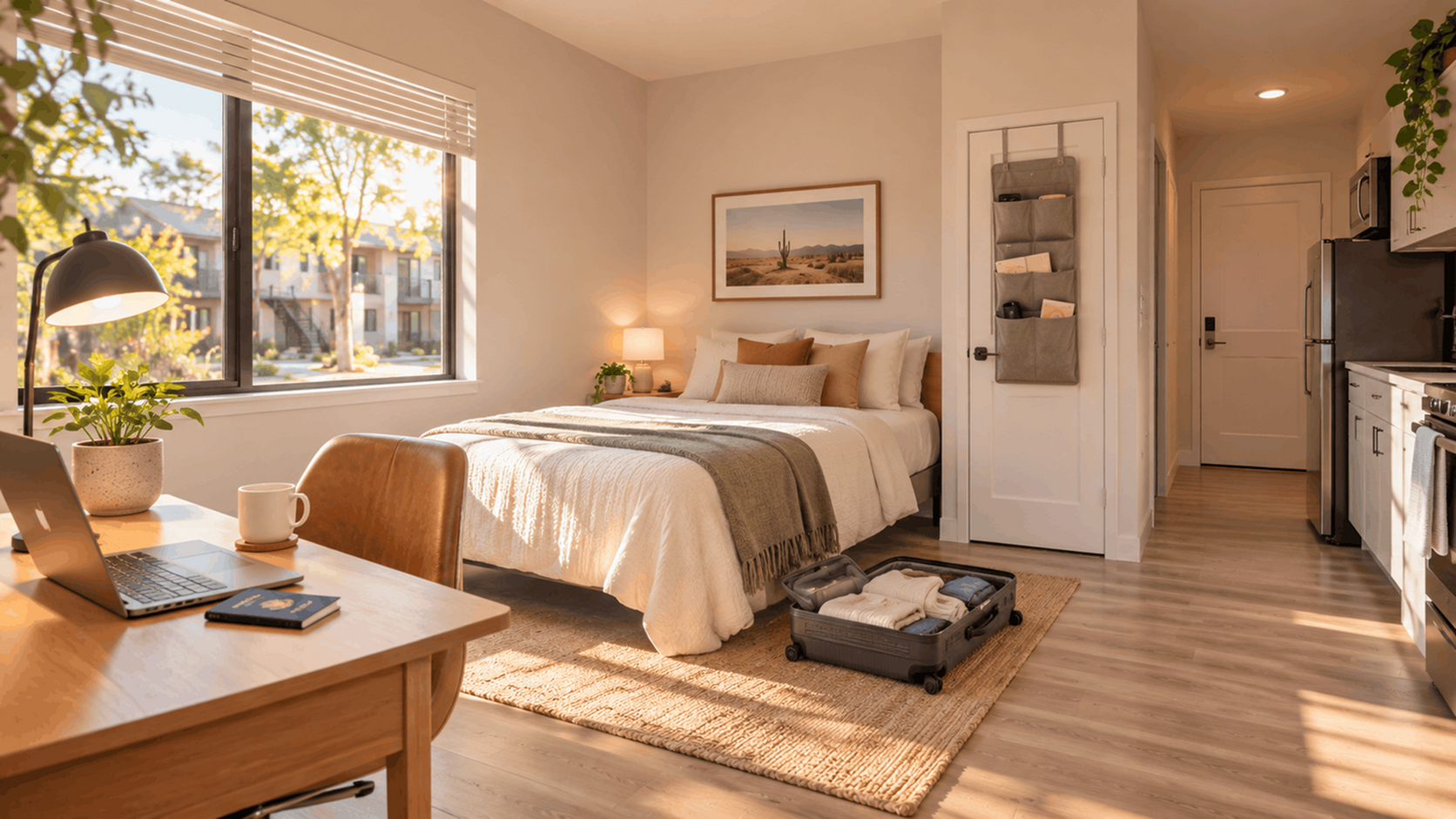
Airline baggage limits make fully furnished apartments attractive for study abroad and exchange students crossing an ocean. You skip buying a bed frame in your first week, and you don't have to sell it all again when your program ends. The tradeoff is fewer available units, so ask early. Unfurnished apartments can work well for degree-seeking students staying several years, since the furniture gets real use.
How Can Housing Overseas Students Book Safely From Abroad?
Booking a home you've never seen in person is where most problems start. The Federal Trade Commission warns that fake rental listings often ask for fees or deposits by wire transfer, gift card or cryptocurrency, and it advises renters to keep looking if they can't see the place or sign a lease before paying.
Study abroad and exchange students searching from another time zone are an easy target. A few habits close most of the gaps:
- Request a live video walkthrough, or review the property's own photo gallery and virtual tour, so you're looking at the actual building.
- Confirm the street address on a map and check that the listing matches the property's official website.
- Call the leasing office using the number published on that official site, not one sent in a message.
- Read and sign the lease before sending a deposit, and pay through a traceable method.
- Save every email, receipt and signed document in one folder you can reach from your phone.
Off-Campus Housing Documents to Prepare
Off-campus housing applications in the U.S. often ask for identification, income or funding proof and rental history. Many new arrivals don't have a Social Security number or U.S. credit file yet. That's normal. Ask each property up front which documents it accepts in their place, such as your passport, visa, I-20 or DS-2019, and the financial statements you used for your visa interview. Requirements differ between landlords, so get the answer in writing.
Student Accommodation Near Texas State in San Marcos
Student accommodation off campus in San Marcos gives you an alternative to the residence hall waitlist. At The Lanes at Oslo, the studio and one-bedroom floor plans showed lease terms of 9 to 15 months as of November 2026, which lines up with a full academic year. Furnished layouts are available in select units only, so mention it early if you need one.
A couple of features matter more when you're arriving from overseas. Controlled access entry adds a layer of security for someone who doesn't know the area yet, and a 24-hour package locker system means boxes you ship ahead don't sit on a doorstep. You can also review the map of the surrounding neighborhood to see how close campus, groceries and Rio Vista Park are before you commit.
Frequently Asked Questions
1. 2. Can I sign an apartment lease before I arrive in the U.S.?
Yes. Many U.S. properties accept online applications and electronic lease signing from abroad. Ask the leasing office which documents it needs from international applicants, confirm your move-in date falls within your 30-day arrival window, and sign the lease before paying any deposit so your agreement is in writing.
3. How early can exchange students move into housing?
Your move-in date depends on your arrival date. F-1 and J-1 students on initial documents can enter the U.S. up to 30 days before the program start date on their I-20 or DS-2019. Set your lease start within that window so you aren't paying rent on an apartment you can't legally reach yet.
4. Is short term student housing available for one semester?
It exists, but supply is tighter than for year-long leases. For study abroad and exchange students staying one term, sublets and extended-stay rentals can work, though they need extra verification. Some apartment communities offer shorter terms for an added cost, while others start at nine months. Ask each property directly and compare the total cost against a longer lease.
5. What should I ask a leasing office before booking from overseas?
- Which documents do you accept if I don't have a U.S. credit history or Social Security number?
- What lease lengths are available, and do they match my program dates?
- Are any furnished units open for my move-in date?
- Can you hold packages that arrive before I do?
- Which utilities and services are included in my monthly payment?
Do I need to tell my school my new U.S. address?
Yes. International students should share their U.S. address with their designated school official or program sponsor and update it whenever they move. Keeping that record current is part of maintaining your status. Your international student office can explain the exact steps and timing for your program.
Conclusion
Housing is the one arrival task study abroad and exchange students can finish before leaving home, and it makes the rest of that 30-day window far less stressful. Pick a lease that matches your program dates, verify the property through official channels and sign before you pay. If you're heading to Texas State, contact our San Marcos leasing team to check availability for your arrival date.