Quick Answer: Moving to San Marcos, TX in 2026 means landing in one of the fastest-growing cities in the state, sitting on Interstate 35 about 30 miles south of Austin and 50 miles north of San Antonio. The city passed 77,830 residents in 2025 and draws students, healthcare workers, remote professionals, and families with a median gross rent near $1,322.
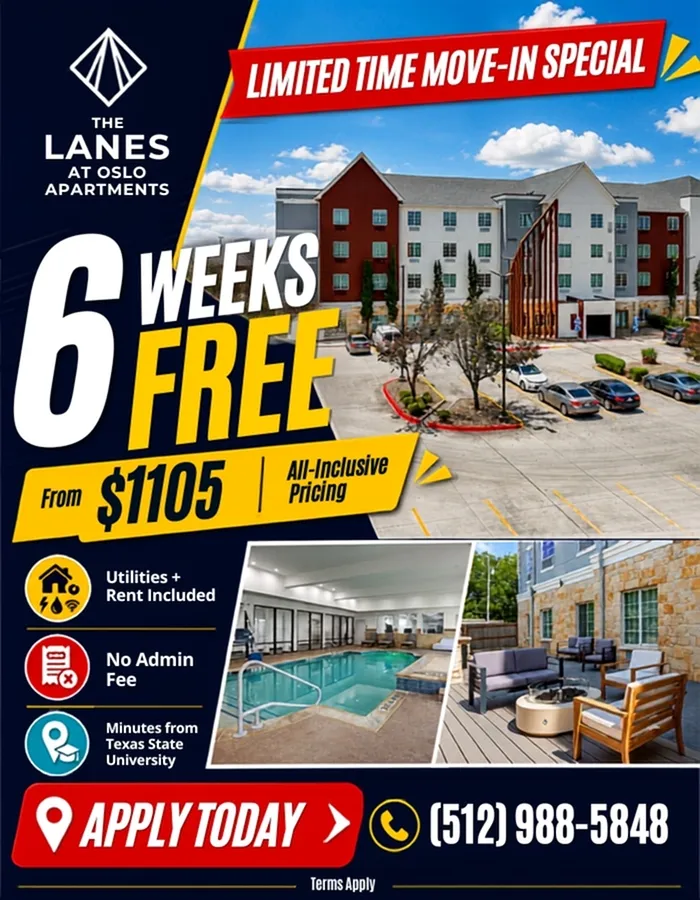
San Marcos sits squarely between Austin and San Antonio, and that middle-of-the-corridor location does most of the heavy lifting. Moving to San Marcos, TX puts you roughly 30 minutes from downtown Austin and under an hour from San Antonio, with Texas State University, the spring-fed San Marcos River, and the Premium Outlets all close by. Serving renters across Hays County, The Lanes at Oslo sits right on South Interstate 35, minutes from campus and the water. Start with our neighborhood map and directions to see exactly where the community lands.
Why Is San Marcos One of the Best Places to Live in Texas?
San Marcos ranks among the best places to live in Texas because it pairs small-city cost with big-city access. The population grew 14.9% between 2020 and 2025, faster than San Antonio's 8%, and the average commute is just 24 minutes. Students, nurses, and Austin commuters all fit here comfortably.
Location is the whole pitch. You're close enough to Austin for a concert or a tech job, close enough to San Antonio for the River Walk or a hospital shift, and far enough from both to keep housing reasonable. That balance is why San Marcos keeps landing on lists of good places to live in Texas, and it's why corridor-positioned apartments at The Lanes at Oslo stay in steady demand.
The city also skews young. Census figures put the median age around 25, and more than a third of residents fall in the 15-to-24 range, a direct result of Texas State University. That energy shapes the food, the music, and the rental market. It also means plenty of newcomers are weighing the best places to move in Texas at the same time you are, so demand for well-located apartments stays high year-round. For a lot of newcomers, moving to San Marcos is a first step before deciding where in Central Texas to plant roots.
What Does It Cost to Live in San Marcos?
The San Marcos cost of living is anchored by housing, and here the numbers work in a renter's favor. The U.S. Census Bureau puts median gross rent at $1,322 a month, essentially the same as San Antonio and well under Austin. Median home value sits at $310,400, and the median household income is $51,281.
San Marcos cost of living compared to Austin and San Antonio
Here's the part that surprises newcomers. San Marcos rent lands right at San Antonio levels, yet San Marcos home values run higher than San Antonio's, a quirk driven by land demand along the corridor and the student housing market. Incomes tell the other half of the story. Austin households earn more on paper, which is part of why so many people live in San Marcos and commute north or work remotely. If your budget is built around monthly rent, the gap with Austin is real money.
| City | Median gross rent | Median home value | Median household income |
|---|---|---|---|
| San Marcos | $1,322 | $310,400 | $51,281 |
| San Antonio | $1,324 | $235,700 | $65,056 |
| Austin | $1,655 | $512,700 | $91,461 |
These figures come from the Census Bureau's American Community Survey. Published rent and home values lag the live market a little, so treat them as a baseline rather than a live quote. You can check the source numbers on the Census Bureau QuickFacts page for San Marcos before you budget.
What Are Your Housing Options When Moving to Texas?
Housing options when moving to Texas come down to renting or buying, and in San Marcos most residents rent. Only 30.8% of homes are owner-occupied, one of the lowest rates in the region, which means the rental market runs deep and the apartment supply along I-35 is large. Most people moving to San Marcos rent before they ever buy, and the numbers explain why.
Apartments in San Marcos for renters
Apartments dominate the local housing stock. Large complexes make up close to half of all housing units in the city, so renters get real choice on price, size, and location. Anyone moving to San Marcos for school or a hospital job leans on this deep supply. If you're weighing apartments in San Marcos, focus on distance to I-35, to Texas State University, and to the hospital, since those three points drive most people's daily drive.
For students and young professionals, a studio or one-bedroom near the highway keeps commuting simple. The Lanes at Oslo offers studio and one-bedroom floor plans built for exactly that renter. Plenty of San Marcos apartments sit farther from campus and the interstate, so location is worth checking before you commit.
San Marcos homes and the buyer's market
If you plan to buy, San Marcos homes carry a median value of $310,400, higher than San Antonio but well below Austin. Inventory skews toward older single-family houses, since the median build year is around 2001, plus newer construction on the city's edges as developers chase corridor growth. Buyers moving from Austin often find their money stretches further here, while buyers coming from San Antonio may notice prices run a little steeper than expected. You can browse the photo gallery and virtual tour to compare a rental option while you shop. Either way, renting first is a common way to learn the neighborhoods before committing to a purchase.
Frequently Asked Questions
1. Is San Marcos, TX a good place to live?
San Marcos works well for renters who want highway access to Austin and San Antonio without a big-city rent bill. The city is young, growing fast, and centered on Texas State University and the San Marcos River. The average commute is 24 minutes, and rent tracks San Antonio levels, which keeps monthly costs manageable for students and workers alike.
2. How far is San Marcos from Austin and San Antonio?
San Marcos sits on Interstate 35 about 30 miles south of downtown Austin and roughly 50 miles north of downtown San Antonio. Both drives usually run 30 to 60 minutes depending on traffic and time of day. That central position is a big reason people choose the city when moving to Texas for a corridor job.
3. What is the cost of living in San Marcos, TX?
Housing is the biggest line item, and San Marcos comes in below Austin on nearly every measure. Quick reference points from the Census Bureau:
- Median gross rent: $1,322 per month
- Median home value: $310,400
- Median household income: $51,281
- Average commute: 24 minutes
Groceries and utilities track close to state averages, so rent is where most of your savings versus Austin actually show up.
4. Are apartments in San Marcos expensive?
Apartments in San Marcos are moderately priced by Central Texas standards. Median gross rent sits near $1,322, close to San Antonio and clearly under Austin's $1,655. Studios and one-bedrooms near I-35 and Texas State University tend to lease fastest, especially before the fall semester, so starting your search early gives you better pricing and more choice.
5. Why do so many people rent in San Marcos?
Only about 31% of San Marcos homes are owner-occupied, one of the lowest rates in the region, largely because of the Texas State University student population. That creates a deep rental market with plenty of apartment supply along the I-35 corridor. For newcomers, renting first is a practical way to test neighborhoods before deciding whether to buy.
Conclusion
Moving to San Marcos, TX gives you a rare middle seat between Austin and San Antonio: real highway access, a lively college town, and rent that stays closer to San Antonio than to Austin. For students, healthcare workers, commuters, and families, the math often favors renting first while you settle in. If a studio or one-bedroom minutes from I-35 and campus fits your move, connect with our leasing team at The Lanes at Oslo to see what's available.