Quick Answer: Living Off-Campus at Texas State means renting an apartment in San Marcos instead of a residence hall, an option open to most students once the first-year housing requirement lifts. Living Off-Campus at Texas State gives you more space, privacy, and control over your budget, though you take on rent, utilities, and a commute the dorms never ask of you.
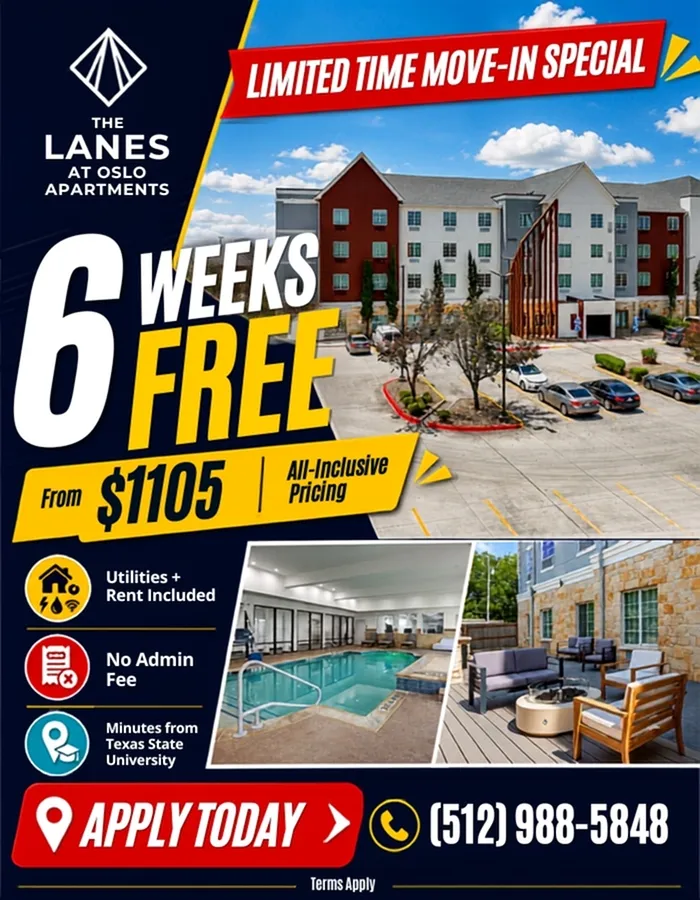
Renting your first apartment is a big step. Living Off-Campus at Texas State usually begins the year after the residence hall requirement lifts, and San Marcos gives returning Bobcats plenty of room to land. The Lanes at Oslo sits minutes from the Texas State campus, serving TXST students who want a quiet place to study and a short trip to class. Scan the neighborhood near campus before you commit to a lease.
What to Expect When Living Off-Campus at Texas State
Off-campus life trades the meal plan and the front-desk staff for a lease, monthly bills, and a set of keys that are entirely yours. Texas State requires new students who finished high school within the past 12 months to live on campus, so this decision usually belongs to sophomores, juniors, transfers, and anyone who qualifies for an exemption.
You handle everything the dorm used to handle. Electricity, internet, renters insurance, and a weekly grocery run all land on you. That sounds like a lot, and some weeks it is. It also means nobody sets quiet hours for you, and you decide who visits and when. Purpose-built student communities soften the jump by bundling some utilities and offering furnished options, so ask what is included before you compare prices.
The move itself carries costs the dorm never charged. Expect an application fee, a security deposit, and often first month's rent up front, plus whatever furniture and kitchen basics you do not already own. Weigh that against the payoff. A private bedroom, a full kitchen, a real lease, and neighbors who are also students give many Bobcats a calmer place to study than a shared hall. The tradeoff is responsibility, and it arrives on day one.
Is Texas a Good Place to Live for Bobcats?
Is Texas a good place to live while you earn a degree? For most students the answer leans yes. Texas has no state income tax, and the benefits of living in Texas show up in a cost of living that runs below the national average across much of the state. San Marcos sits on Interstate 35 between Austin and San Antonio, so internships and weekend trips in either city stay within reach. The spring-fed San Marcos River runs right through town, and warm weather stretches across most of the year.
What Does Living Off-Campus Cost Compared to TXST Tuition?
Rent is a separate line from tuition, but the two share your budget. Undergraduate TXST tuition and fees for Texas residents run about $11,450 a year, while out-of-state students pay roughly $22,930, based on the university's published figures. Texas State in-state tuition stays well below the national average for a public four-year school, which leaves a little more breathing room in the housing part of your budget.
Whether off-campus actually costs less comes down to your choices. Split a two-bedroom with a roommate and the per-person rent drops fast. Skip the required dining plan and cook at home, and you claw back real money over a semester. On the other side, a solo one-bedroom with every utility separate can edge past a dorm room once the bills stack up. Run the full number, not just the rent line.
| What you pay for | On-campus dorm | Off-campus in San Marcos |
|---|---|---|
| Housing | Room rate set by hall, billed per semester | Rent near $1,050 to $1,150 for a one-bedroom, varies by community |
| Dining | Full residential dining plan required | Groceries and meals on your own budget |
| Utilities | Bundled into the room rate | Electric, internet, and water often billed separately |
| Contract | Academic-year housing contract | Usually a 12-month lease |
| TXST living-cost estimate | The university's 2024-2025 cost of attendance set living expenses near $16,920 a year, applied whether you live on or off campus. | |
How San Marcos Rent Compares to the Average Rent in Houston
Students sometimes benchmark San Marcos against a big Texas metro. As of June 2026, RentCafe put the average rent in Houston near $1,345 a month, with one-bedrooms around $1,190. San Marcos rent sits in a similar range: Zillow listed the typical one-bedroom near $1,050 in spring 2026, and other trackers ran a bit higher. Here is the honest takeaway. The cost of apartments in Houston Texas is not dramatically lower than a college town, and roommates plus purpose-built student housing can tilt the math toward San Marcos. Compare studio and one-bedroom floor plans to see what fits.
Can You Use Federal Student Loans for Off-Campus Housing?
Yes. Federal student loans for off campus housing are allowed because your school's cost of attendance already includes a housing and food allowance, whether you live in a dorm or rent nearby. Your aid pays tuition and fees first, then any leftover refund lands in your account for rent and groceries.
Loans disburse once a semester, not monthly, so a refund meant to cover four months of rent shows up all at once. Split it into a monthly plan the day it arrives. Since aid pays the school before you see a dime, expect to cover your first month and deposit out of pocket, because that refund often clears after classes start. For the official rules on how aid is calculated, the U.S. Department of Education keeps current guidance at studentaid.gov. Borrow only what rent, utilities, and food actually require, since every dollar comes back with interest.
Keep your paperwork tidy while you are at it. Save the lease and rent receipts so you can show the money went toward approved living costs if anyone asks. If your award falls short of the full year, your financial aid office can walk you through the cost-of-attendance figure they used, and sometimes adjust it when your real housing costs differ.
Frequently Asked Questions
1. Can freshmen live off-campus at Texas State?
Usually no. Texas State requires students who graduated high school within the previous 12 months to live in on-campus housing. Some students qualify for an exemption, such as commuting from a parent's home within 50 miles, transferring in after living on campus elsewhere, being 21 or older, or being married or having dependents.
2. Is living off-campus cheaper than the dorms at TXST?
It depends on your setup. Costs swing based on a handful of choices:
- Roommates, which split rent and utilities several ways
- Whether the community bundles internet, water, or trash into the rent
- The dining plan you skip by cooking at home
- Your commute, including gas, parking, or a bus pass
3. How far is off-campus housing from the TXST campus?
It ranges from a short walk to a ten-minute drive. Communities close to Interstate 35 and Bobcat Tram routes keep the trip simple. The Lanes at Oslo sits minutes from campus, so you can trade a long commute for more time studying, sleeping, or working a part-time job in town.
4. Do I need a car to live off-campus in San Marcos?
Not always. The Bobcat Tram serves several off-campus routes, and many students bike or walk from nearby neighborhoods. A car helps for grocery runs and trips up I-35, but plenty of Bobcats manage with transit, a bike, and the occasional rideshare, which also trims parking costs.
5. When should I start looking for an off-campus apartment?
Start a few months ahead. Student communities near Texas State fill up before fall, and the best floor plans go first. Touring in late winter or early spring gives you time to compare rent, read the lease, and line up roommates before signing anything for the next academic year.
Conclusion
Living Off-Campus at Texas State rewards students who want their own space and are ready to manage a budget that runs past tuition. San Marcos keeps rent reasonable, campus close, and Austin and San Antonio a short drive down I-35. Weigh the dorm's convenience against the freedom of a lease, then take a virtual tour or start an application when you are ready to make San Marcos home.