Quick Answer: How to actually use your building's bowling alley starts with three questions: when is it open, does it need a reservation, and what shoes are allowed on the approach. Residential lanes are often shorter than regulation, so the ball reaches the pins faster and hooks less than it would at a commercial center.
Most residents walk past the lanes for months before rolling a single ball. Learning how to actually use your building's bowling alley takes about ten minutes of reading and one afternoon of practice. The Lanes at Oslo sits on the I-35 frontage road in San Marcos, serving Texas State students, commuters, and working renters who want something to do that isn't another streaming queue.
What House Bowling Looks Like Inside an Apartment Building
House bowling in a residential building means lanes your community owns, maintains, and opens only to residents and their guests. No counter, no hourly rate, no league night blocking the schedule. The tradeoff is fewer lanes, posted hours, and equipment that stays in good shape only if people treat it that way.
Federal data explains why a shared room like this matters more than it used to. The Bureau of Labor Statistics reported that the share of Americans who socialized on an average day fell from 38 percent in 2015 to 30 percent in 2025, with daily socializing time slipping to 35 minutes. Time spent on games and computers went the other direction, climbing to 37 minutes a day.
San Marcos is a renter's city. Census QuickFacts estimates put the owner-occupied rate at 30.8 percent in a city of roughly 77,830 people as of July 2025. Close to seven in ten households here rent, so shared rooms carry the weight a backyard would somewhere else. The photo gallery and virtual tour shows how the lanes sit against the rest of the common area.
How Do Bowling Alley Specs at Apartments Compare to a Commercial Center?
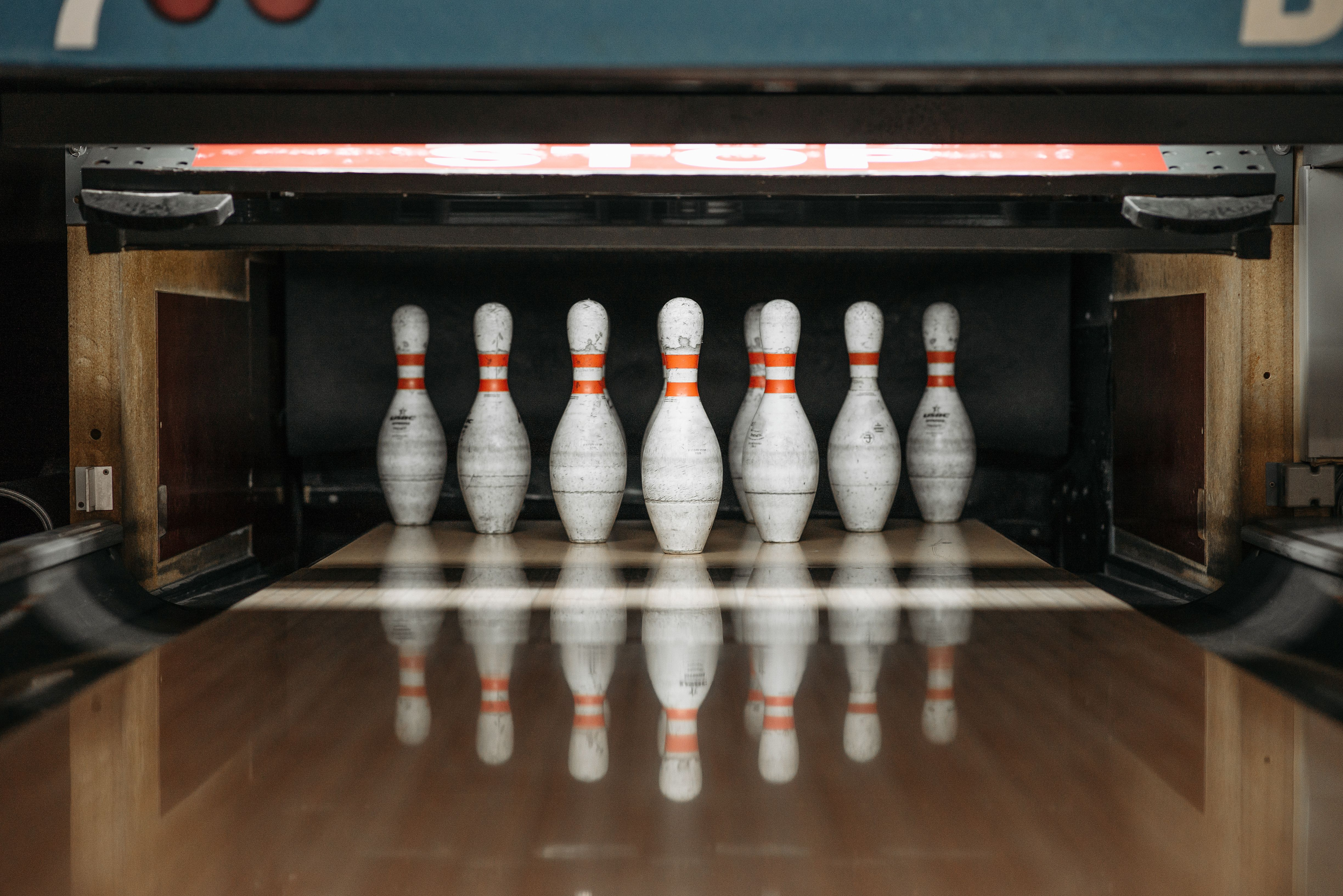
A regulation lane measures 60 feet from the foul line to the center of the head pin and 41.5 inches wide across 39 boards, with a minimum 15-foot approach behind the line. Bowling alley specs in a residential building rarely match that. Most amenity installs shorten the lane to fit the footprint the floor plate allows.
That difference is not a flaw. A full setup needs roughly 83 to 87 feet of room length once you count the approach, the pin deck, and the pinsetter service area. Shortened and mini installations commonly run 30 to 45 feet instead. Anyone who has ever priced a bowling lane in house plans of their own already knows why almost nobody builds one.
| Element | Regulation figure | What to check on your building's lane |
|---|---|---|
| Lane length | 60 ft, foul line to head pin | Ask whether yours is full length or shortened |
| Lane width | 41.5 in across 39 boards | Count the boards before you pick a target line |
| Approach | 15 ft minimum | A short approach means three steps, not five |
| Gutters | 9.25 in wide, 1.875 in deep | Bumpers sit over the gutter and change the rebound |
| Targeting arrows | 15 ft past the foul line | Shortened lanes may have no arrows at all |
| Total room length | 83 to 87 ft | Why most residential lanes run 30 to 45 ft |
Indoor Bowling Surfaces and Why They Play Differently
Oil is the variable nobody explains. Commercial centers condition their lanes to a set pattern, and that layer of oil is what lets a ball skid, grab, and turn. Indoor bowling on a residential lane may follow a different conditioning schedule, or none at all. Ask the office before you blame your form.
How Do You Book and Play Your First Bowling Alley Game?
Start at the amenity door, not the ball rack. Check the posted hours, confirm whether your community requires a reservation, and find out how many guests you can bring. If nothing is posted, send a message through the resident portal and get an answer in writing before you plan a bowling alley game around six friends.
Choosing a House Ball You Can Actually Control
Grip first, weight second. Your thumb should slide out clean, and your middle and ring fingers should reach the second knuckle without stretching. Then take the heaviest ball you can swing without clenching. Fingers lead the list of body parts hurt in bowling cases captured by the CPSC injury surveillance system, which is a fair argument for sizing down rather than up.
Twenty minutes on the lanes is not a workout. It is not nothing, either. Federal physical activity guidance is direct on the point: any amount of moderate activity beats sitting, and the second edition of the guidelines dropped the old rule that only 10-minute bouts counted toward the weekly target.
Lane Etiquette That Keeps a Luxury Bowling Alley Amenity Working
One bowler at a time, and the lane on your right goes first if you both step up together. Keep street shoes off the approach, because the grit they carry is what ruins a slide. Drinks stay behind the seating. Never step past the foul line: conditioner on your sole turns the approach into a hazard for whoever bowls next.
Pins jam. When they do, submit a maintenance request rather than reaching into the machine. A luxury bowling alley amenity stays open because residents report problems early, not because they try to fix them personally.
Keep the path to the lanes clear too. Under the 2010 ADA Standards published by the U.S. Access Board, at least 5 percent and no fewer than one of each type of bowling lane must sit on an accessible route. Bags and chairs parked in a walkway defeat that.
Frequently Asked Questions
1. Do I need to reserve the lanes before I show up?
Reservation rules differ by community. Some run first come, first served, while others block the room for resident events on certain nights. None of this is standard across buildings, so check the posted amenity rules or ask the leasing office, especially if you are planning around a birthday or a group larger than four.
2. Is a building amenity the same as an in home bowling alley?
Not quite. An in home bowling alley is a private installation inside one residence, sized and paid for by a single owner. A building amenity is shared, maintained by the property, and covered by your lease instead of a construction budget. The play feels similar. The access rules are completely different.
3. What should I check before my first game?
- Posted hours and whether a reservation is required
- Guest limits and whether guests need to be signed in
- Shoe rules for the approach area
- Which ball weights sit on the rack
- Who to contact when a pinsetter jams
4. Can I bring friends who don't live in the building?
Most communities allow resident guests with conditions attached, such as a cap on numbers or a rule that the resident stays present the whole time. Ask before you invite eight people over. Guest policies exist to keep an amenity usable for everyone in the building, not to complicate your Friday night.
5. Why does my ball hook less here than at a bowling center?
Oil, almost always. Commercial lanes are conditioned to a pattern that lets a ball skid down the front, then grab and turn toward the pocket. A shorter or differently maintained lane changes that reaction, and less oil usually produces a straighter roll. Aim tighter to the pocket and stop forcing a curve.
Conclusion
Knowing how to actually use your building's bowling alley comes down to logistics: hours, reservations, shoes, and a ball that fits your hand. The rest is showing up. For residents in San Marcos, the best bowling alley on a Tuesday night is the one downstairs, and it costs nothing beyond the walk. Still shopping? The studio and one bedroom floor plans show what is open now.