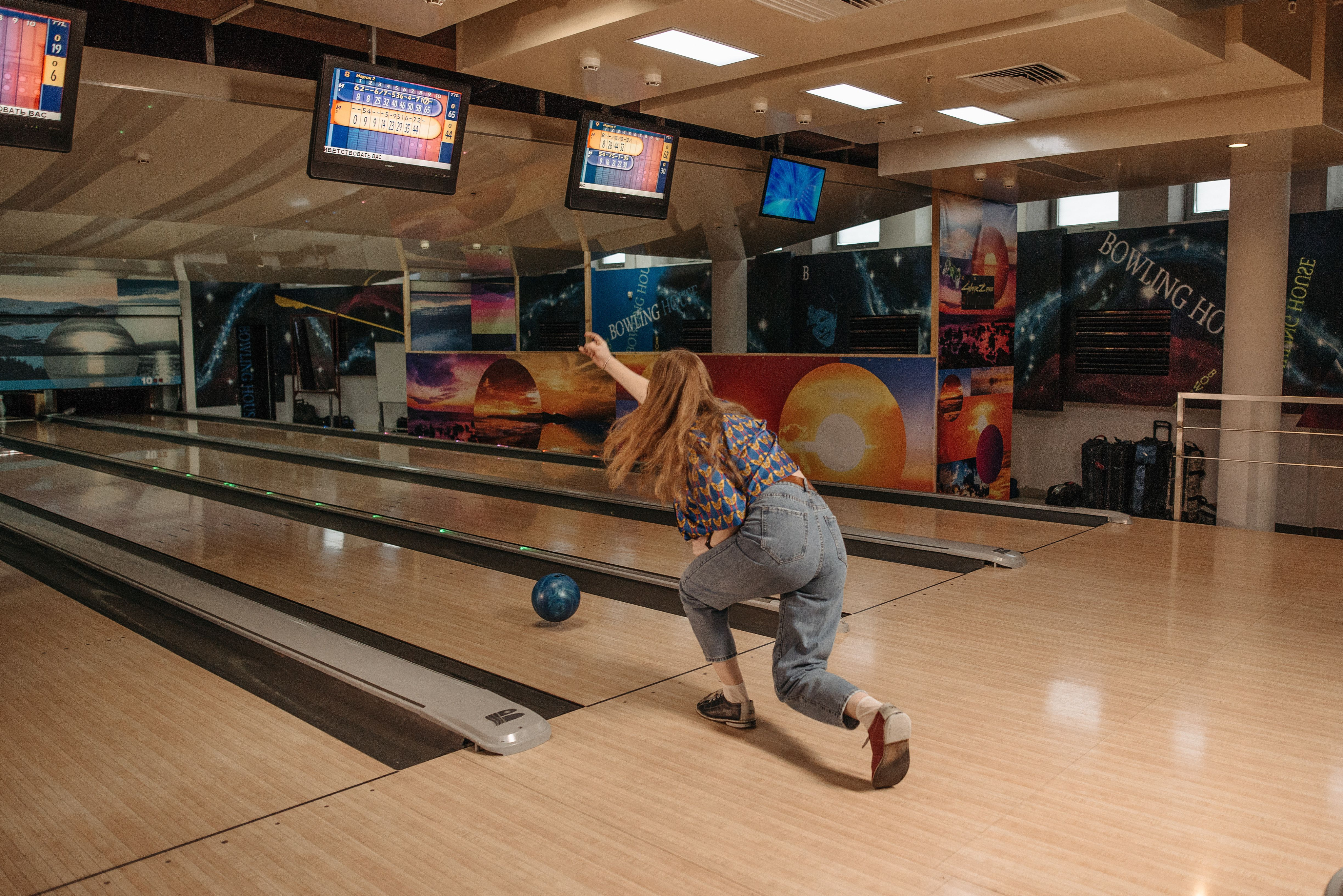
Quick Answer: Apartments with a bowling alley put two to four short lanes inside the community amenity space, usually free for residents and open by reservation. Most communities install compact duckpin or mini bowling equipment rather than regulation 60 foot lanes, so expect lighter balls, tighter scoring, and a room sized for a few friends.
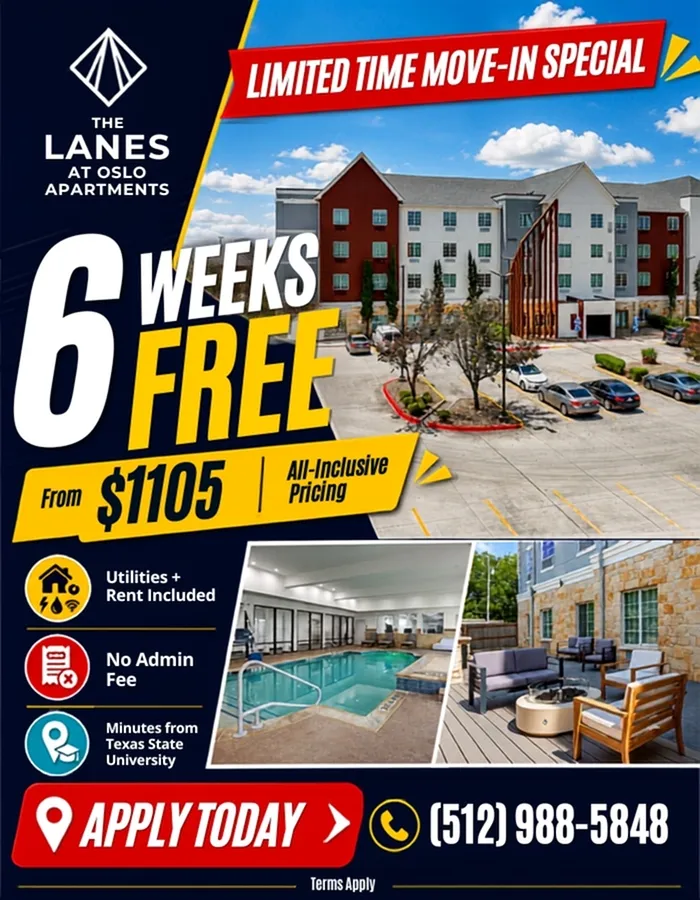
Bowling lanes are no longer a novelty in multifamily buildings. They turn up in student communities, downtown mid rises, and suburban garden properties. Apartments with a bowling alley sell one specific promise: a reason to leave your unit that costs nothing extra. At The Lanes at Oslo in San Marcos, Texas, the lanes sit in the community amenity package alongside the pool and fitness center.
What to Look For in Apartments With a Bowling Alley
Across apartments with a bowling alley, lane count, lane type, and access rules decide whether the room actually gets used. Two lanes serve a small group well and a full building poorly. Ask what the room looks like on a Friday night in August, not what the marketing photos show on a quiet Tuesday afternoon.
Most residential lanes are not regulation. A sanctioned ten pin lane runs 60 feet from the foul line to the head pin, plus roughly 15 more feet of approach, a footprint few amenity rooms can absorb. Duckpin and mini systems compress that into a fraction of the space. Duckpin balls measure about 4.75 to 5 inches across, weigh under four pounds, and have no finger holes. You get three rolls per frame instead of two. Scores run lower and nobody looks like a pro.
Then there is the money question. Some communities fold lane access into rent, others charge per game, and a few operate the space as a public venue with resident perks. That distinction matters more than lane count. An on-site bowling alley you pay for every time is an on-site bowling alley you will visit twice.
Access Rules That Separate the Best Apartment Amenities From the Rest
Reservation policy is where good amenities quietly fail. Two lanes and no booking tool turns into a first come standoff every weekend. Ask how far ahead residents can reserve, whether guests are allowed, whether shoes and balls are provided, and what the posted hours are.
Accessibility is the question almost nobody raises on a tour. Federal accessibility guidelines summarized by the U.S. Access Board require at least 5 percent of bowling lanes, and never fewer than one of each type, to be served by an accessible route, along with the player seating that serves those lanes. In a two lane room that means at least one lane. Confirm the route in person if it affects you or a guest.
What Is It Like to Have a Bowling Alley in House?
Convenience changes behavior. A bowling alley in house means a game happens on a whim, at 9 p.m., in whatever you were already wearing. No drive, no lane fees, no waiting on a party of six ahead of you. The tradeoff is scale, since residential rooms hold maybe a dozen people before they feel crowded.
That convenience arrives at a useful moment. Bureau of Labor Statistics figures from the 2025 American Time Use Survey, released in June 2026, show 30 percent of Americans socialized or communicated on an average day, down from 38 percent in 2015. Time spent on games and computer use went the other way, climbing from 25 minutes to 37 minutes daily. An amenity forty seconds from your door is one of the few things that reliably pushes back against that trend, and CDC social connectedness programs make the same case from the public health side.
Now the honest part. Lanes need service. Pinsetters jam, sensors drift, and a two lane room can go dark for a week when a part sits on backorder. Ask how amenity maintenance gets requested and how fast it turns around. Wide angle listing photos flatter these rooms, so walk the space on a tour or study the photo gallery and virtual tour first.
How Bowling Stacks Up Against Other Apartment Community Amenities
Not every amenity earns its square footage. Here is how lanes compare to the apartment community amenities renters most often weigh against them.
| Amenity | Space Needed | Best For | Downtime Risk | Everyday Use |
|---|---|---|---|---|
| Duckpin or mini lanes | Moderate, two to four lanes | Groups of four to eight | Higher, mechanical parts | Weekly or occasional |
| Fitness center | Moderate, indoor | Solo daily routines | Low, per machine | Daily |
| Swimming pool | Large, outdoor | Warm months, big groups | Seasonal closures | Seasonal |
| Arcade or games room | Small, flexible | Short drop in sessions | Moderate, cabinet repairs | Frequent |
| Clubhouse lounge | Flexible, shared | Studying and hosting | Low | Daily |
| Strongest pairing | Lanes plus a lounge | Social and solo renters | Spread across two rooms | Highest weekly use |
Do Apartments With Arcade or Games Room Space Beat On-Site Lanes?
It depends on how you spend a free hour. Apartments with arcade cabinets suit short solo sessions and unplanned drop ins. Apartments with games room setups, usually pool tables and shuffleboard, suit background socializing. Lanes suit a planned hour with people you already know.
Bowling carries a fitness footnote worth knowing before you rank it too highly. CDC guidance for adults calls for 150 minutes of moderate intensity activity each week, and bowling falls in the light intensity bracket. It counts as movement, not as a workout. If a community's gym is thin, unique apartment amenities like lanes will not close that gap, so evaluate both rooms on the same tour.
San Marcos gives this amenity more weight than most markets do. Census Bureau estimates put the city at 77,830 residents as of July 1, 2025, with an owner occupied housing rate of 30.8 percent across 2020 to 2024. Renters are the clear majority here. Apartments with clubhouse and lane space that people genuinely use compete well in a town like this, so compare the studio and one bedroom floor plans on the same visit.
Frequently Asked Questions
1. Are apartments with a bowling alley more expensive to rent?
Amenity rich communities often price above bare bones properties in the same submarket, though unit size, building age, and location drive that gap far more than the lanes do. Published rent figures go stale quickly and shift by lease term, so ask the leasing office at the specific community for current numbers.
2. Do residents have to pay to use an on-site bowling alley?
Policies vary widely. Some communities include lane access in rent as a standard resident benefit, others charge per game or per hour, and mixed use buildings with a public venue downstairs typically offer residents a discount instead of free play. Get the policy in writing before signing a lease.
3. What should I ask on a tour about apartments with bowling alley access?
- Are the lanes duckpin, mini bowling, or full ten pin?
- Are shoes and balls provided, or do residents bring their own?
- How do reservations work, and can guests bowl with you?
- What are the posted hours, and who enforces quiet hours?
- How is amenity maintenance reported and tracked?
4. Is a bowling alley in house noisy for nearby apartments?
Pin impact produces low frequency sound that travels through building structure more than through open air. Well designed rooms use acoustic wall and ceiling treatment and sit away from residential stacks. If a unit sits directly above or beside the lanes, tour that unit during evening hours before committing to it.
5. Do apartment bowling lanes have to be wheelchair accessible?
Federal accessibility guidelines call for at least 5 percent of bowling lanes, and no fewer than one of each type, to be served by an accessible route, along with the seating for those lanes. In a two lane room that means at least one. Verify it during a tour.
Conclusion
Lanes downstairs work when the rules around them work. Free access, clear reservations, sane hours, and a maintenance process that does not leave the room dark for a month. Apartments with a bowling alley that get those four things right stop being a listing photo and become a reason residents renew. Check the map and neighborhood details for the Interstate 35 corridor, then contact the leasing team in San Marcos with questions about lane hours and guest policy.