
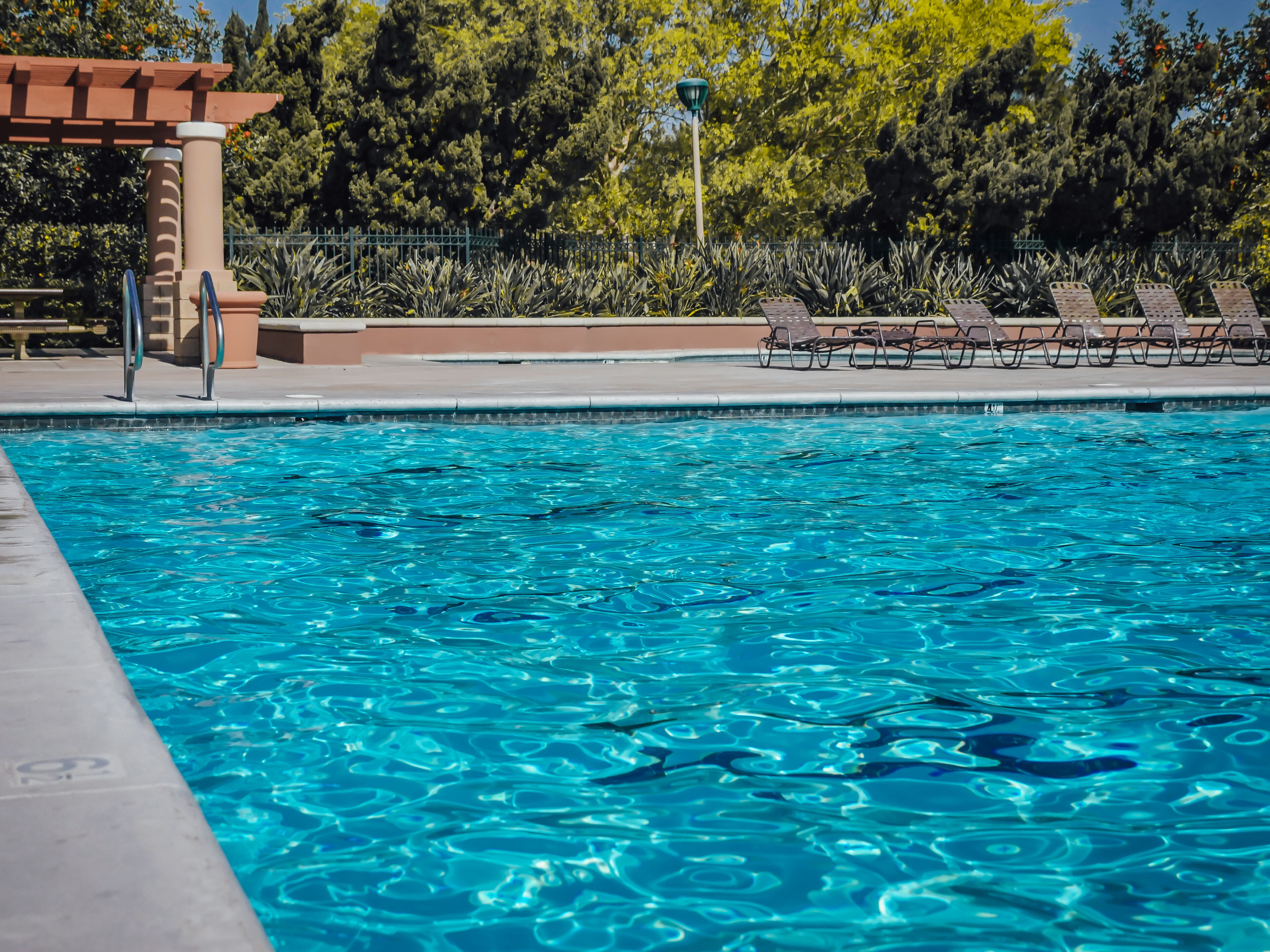
Quick Answer: Apartment pools in Central Texas are worth paying for when you can use them most of the year. National Weather Service normals for Austin put daily highs at 80 degrees or above from mid-April to late October. Before you sign, ask how the pool is billed and what hours it keeps.
A pool is one of the first things renters ask about and one of the last things they price out. Apartment pools in Central Texas have a long season to work with, and that changes what they're worth. The Lanes at Oslo serves renters in San Marcos and along the I-35 corridor between Austin and San Antonio, so this guide leans on local weather records and Texas pool law.
What to Look For in Apartment Pools in Central Texas
Look for four things: a pool you can reach quickly from your front door, posted hours that fit your schedule, a clear answer on how the pool is billed, and signs of regular upkeep. A pool that checks all four gets used. One that misses two turns into a charge you pay and walk past.
Apartment Features That Decide How Often You Swim
Distance matters more than size. A small pool one elevator ride away will see more of you than a large one across the parking lot. Shade and seating count for the same reason, because nobody stays long on bare concrete in August.
Ask whether the pool is indoor or outdoor, and whether it's heated. Among apartment amenities, the pool is the one most tied to weather, so those two answers decide how many months you'll get out of it. At The Lanes at Oslo, the swimming pool sits alongside a bowling alley and a fitness center, and the photo gallery shows the shared spaces before you tour.
Pool Rules Texas Requires Every Community to Post
Most of what's printed on a pool sign comes from the state. The Texas Department of State Health Services pool standards, in effect since April 26, 2024, call for posted hours, a maximum user load, no glass in the pool yard and no pets in the water. Where there's no lifeguard, the sign must also say that anyone under 14 needs adult supervision.
State law adds a fence. Under Texas Health and Safety Code Chapter 757, a multiunit rental complex has to enclose its pool yard with a barrier at least 48 inches high, with gates that close and latch on their own. The owner must inspect that enclosure at least once every 31 days.
These pool rules protect the people most at risk. Drowning is the leading cause of death for children ages 1 to 4, according to the CDC's healthy swimming guidance. A community that enforces its sign is doing its job.
How Long Is Pool Season in Central Texas?
About six and a half months for an outdoor pool. National Weather Service climate normals for Austin's Camp Mabry station, covering 1991 to 2020, show the normal daily high reaching 80 degrees by April 12 and holding there through October 24. The normal high for August is 97.8 degrees.
That's about 28 weeks. For comparison, Canyon Vista, a City of Austin neighborhood pool, ran its 2026 season from June 6 to August 16. Ten weeks. Other city pools keep longer calendars, so treat that as one example. One caveat on the weather data: Camp Mabry is roughly 30 miles from San Marcos, and readings here won't match it exactly.
Why Pool Apartments Earn Their Keep From April to October
Pool apartments that stay open across that whole stretch give you far more swim days than a summer-only schedule. That gap is the main reason apartment pools in Central Texas can pay for themselves. Ask for the pool calendar in writing, including any planned closures for repairs.
Winter is the tradeoff. Austin's normal high in January is about 62 degrees, so an unheated outdoor pool sits idle for a few months of every lease. An indoor or heated pool closes that gap.
Are Amenity Fees Worth It for a Pool?
They can be, if the charge is disclosed up front and you'll swim often enough to justify it. Amenity fees show up in different places depending on the community: folded into base rent, billed monthly, charged once a year, or covered by an all-inclusive rate. The total you pay each month is the number to compare.
Fees for apartment pools in Central Texas aren't standardized, so the lease is the only reliable source. When a community quotes apartment rent, ask whether the pool charge is inside that figure or added later.
| How the pool is paid for | Where it shows up | What to ask |
|---|---|---|
| Included in base rent | No separate line on the lease | Does the rate change at renewal? |
| Monthly amenity fee | A recurring line next to rent | Is it required for every unit? |
| Annual or one-time fee | Move-in costs or a yearly charge | Is it prorated if you move out early? |
| All-inclusive rate | One figure for rent and utilities | Which services does the figure cover? |
Comparing Apartment Costs Line by Line
Put two communities side by side and add up everything that recurs: rent, utilities, parking, pet rent, any amenity charge. Apartment costs that look far apart on a listing can land much closer once the extras are counted. For scale, median gross rent in San Marcos was $1,322 for 2020 to 2024, according to U.S. Census Bureau QuickFacts. Gross rent includes utilities, which makes it a fair yardstick for an all-in monthly figure.
Then run a simple test. Divide what the pool costs you in a year by the number of days you expect to swim. Would you pay that amount at the gate of a public pool? If yes, the fee is fair.
The Lanes at Oslo advertises all-inclusive living, with rent and utilities in one monthly figure. The leasing team can confirm what that figure covers for the studio and one-bedroom floor plans you're considering.
Frequently Asked Questions
1. Are apartment pools in Central Texas inspected?
They are regulated. Texas sets statewide standards through the Department of State Health Services, and local health departments and code enforcement offices help enforce them, so inspection schedules differ by city. State law also requires the owner of a multiunit rental complex to check the pool enclosure and gates at least once every 31 days.
2. What pool rules are standard at Texas apartments?
State standards require a posted sign at every community pool. Expect to see these four:
- Hours of operation and a maximum number of swimmers
- No glass items in the pool yard
- No pets in the pool
- Adult supervision for anyone under 14 when no lifeguard is on duty
3. When can you swim outdoors in Central Texas?
Most years, from mid-April to late October. National Weather Service normals for Austin show daily highs at 80 degrees or above across that stretch, peaking near 98 in August. Water warms more slowly than air, so early spring swims can still feel cold. An indoor or heated pool extends the season.
4. Do all-inclusive apartments charge amenity fees?
It depends on the community. All-inclusive usually means rent and utilities arrive as one figure, but the services inside that figure differ from one property to the next. Ask for a written list of what's covered, and whether any charge for apartment amenities sits outside it.
5. Can guests use an apartment pool?
Usually, within limits the community sets. Guest caps and key-fob access are common, and residents are typically responsible for the people they bring. The posted maximum user load applies to everyone in the water. Check the lease or the community policies before you plan a gathering.
Conclusion
Apartment pools in Central Texas reward renters who do ten minutes of homework: check the pool calendar and get the fee in writing. For anyone weighing apartment living in San Marcos, The Lanes at Oslo pairs a swimming pool with all-inclusive living 3.7 miles from Texas State University. Look over the neighborhood map, then contact the leasing office to ask about the pool and book a tour.