Quick Answer: Amenities that actually get used are the ones attached to a daily routine: in-unit laundry, dependable internet, secure package pickup, and a gym close enough to walk to in sneakers. Pools, lounges and bowling alleys do get used, but only when they sit steps from the front door rather than across a parking lot.
Tour enough properties and a pattern shows up. The amenities that actually get used are rarely the ones staged for the photo gallery, and renters figure this out about six weeks after move-in. At The Lanes at Oslo in San Marcos, the features residents bring up are the ordinary ones: laundry in the unit, a package locker that works at 9 p.m., a fitness room they can reach without driving anywhere.
This guide sorts the daily-use features from the tour-day extras, using national time-use data rather than marketing copy.
What to Look For in Apartment Amenities Before You Sign
Start with your actual week, not the tour route. The apartment amenities worth paying for are the ones your routine already contains: washing clothes, receiving deliveries, exercising, studying, getting online. If an amenity requires you to invent a new habit before it pays off, it usually stops getting used by the second month.
Everyday apartment features beat once-a-year perks
Federal time-use data makes the point clearly. In 2025, 35 percent of employed people did some or all of their work at home on days they worked, according to the Bureau of Labor Statistics. That single number explains why reliable in-unit internet and quiet space now outrank a rooftop anything. Work follows people home, and the apartment has to absorb it.
The same survey found that nearly everyone, 95 percent of people age 15 and over, did something leisure-related on an average day. Most of that time went to screens at home rather than shared spaces. Renters are not short of downtime. They are short of reasons to leave the unit for it.
Which Community Amenities Do Residents Use Most?
Usage follows friction. The community amenities that stay busy are the ones within roughly a minute of the apartment door, available at odd hours, and usable alone without planning. Anything that needs a reservation, a key from the office, or a drive across the property loses most of its audience quickly.
Here is how the common categories tend to sort out.
| Amenity | Typical use pattern | What decides whether it gets used |
|---|---|---|
| In-unit washer and dryer | Weekly, often more | Nothing competes with laundry you can start at midnight |
| Package lockers | Several times a month, year round | Access hours. Lockers tied to office hours lose the evening pickup |
| High-speed internet and common-area Wi-Fi | Daily | Consistency, especially for remote work and online classes |
| Fitness center | Two to four visits a week among regular users | Walking distance and 24-hour access, not equipment count |
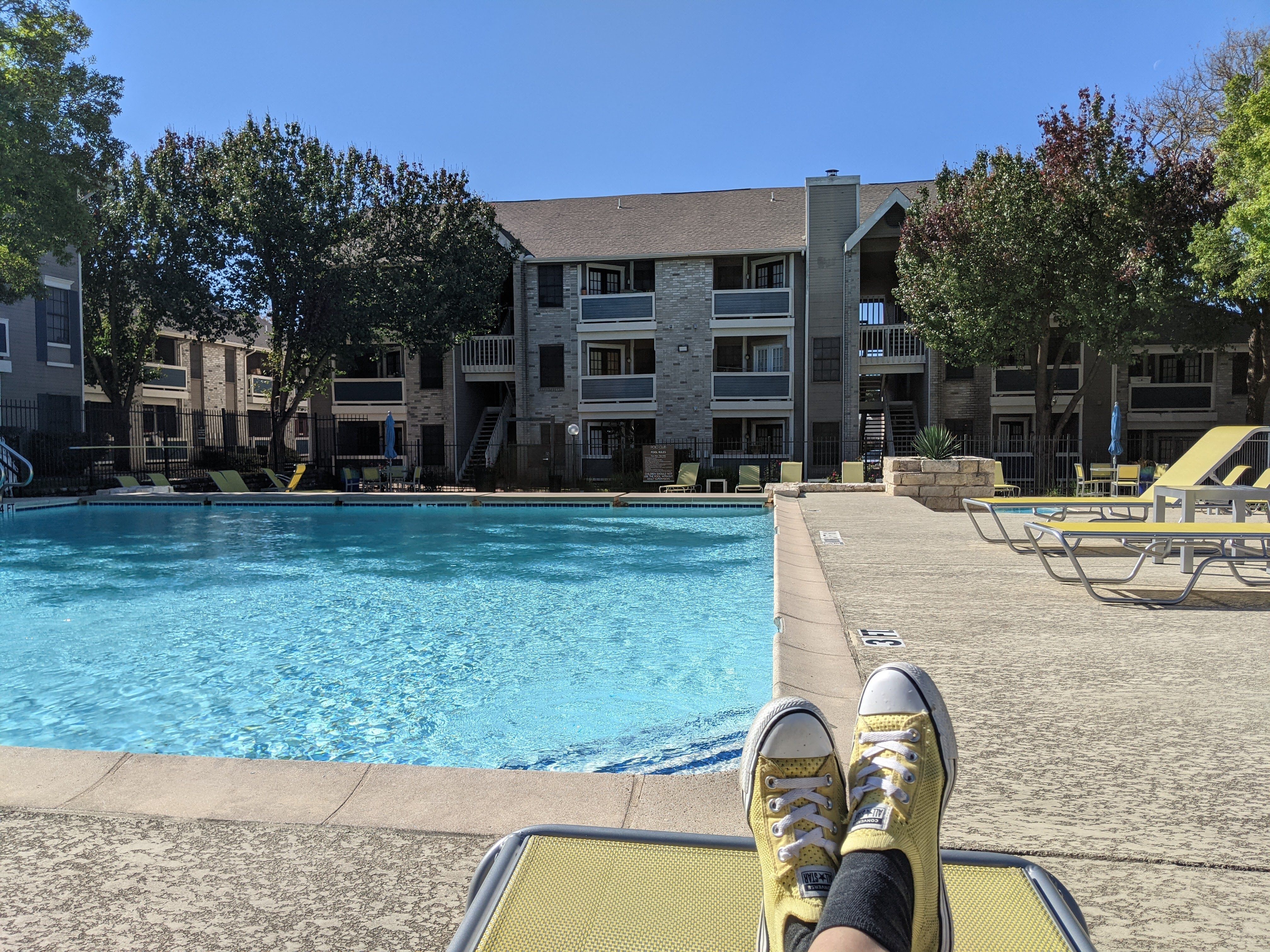
| Swimming pool | Heavy in summer, idle in winter | Climate and shade. In Central Texas the season runs long |
| Bowling alley and game space | Occasional, usually social | It gets used when friends visit and there is no cover charge |
| Controlled access entry and elevator | Every single day | Invisible until it breaks, then it is the only thing anyone mentions |
| Outdoor pet park | Daily for pet owners, never for anyone else | Whether it is on site, which removes the drive to a public park |
| The pattern | Proximity wins | Distance and access hours predict usage better than the feature itself |
Deliveries deserve their own note. E-commerce accounted for 16.4 percent of all U.S. retail sales in 2025 and rose again through 2026, according to Census Bureau quarterly estimates. Packages arrive whether a community is ready for them or not, which is why a 24-hour locker system quietly ranks among the most-used building amenities anywhere.
The gym has a similar story. Federal guidance puts the target at 150 minutes of moderate activity per week, and most people fall short of it. Time-use figures show people ages 15 to 19 spend about 45 minutes a day on sports, exercise and recreation, while those ages 20 to 24 spend closer to 24 minutes, based on 2025 annual averages. An on-site fitness center does not create discipline. It removes the ten-minute drive that ends most workout plans.
Are Luxury Apartment Complexes Worth the Extra Rent?
Sometimes, and the deciding factor is usually overlap rather than prestige. A luxury apartment priced above the market makes sense when its features replace things you already pay for separately: a gym membership, a laundromat run, a coworking day pass, a pet park drive. When the list of apartment amenities duplicates costs you are carrying anyway, the math works. When it adds a wine room you will visit twice, it does not.
Be honest about the apartment perks you will genuinely touch. Luxury apartment complexes compete by lengthening their amenity lists, and long lists photograph well. What matters is how many of those entries survive contact with a normal Tuesday.
San Marcos makes this concrete. Roughly 69 percent of housing here is renter-occupied and about 85 percent of households hold a broadband subscription, per Census Bureau QuickFacts. That is a market of renters who work and study online, which shifts value toward connectivity, laundry and security rather than showpiece square footage.
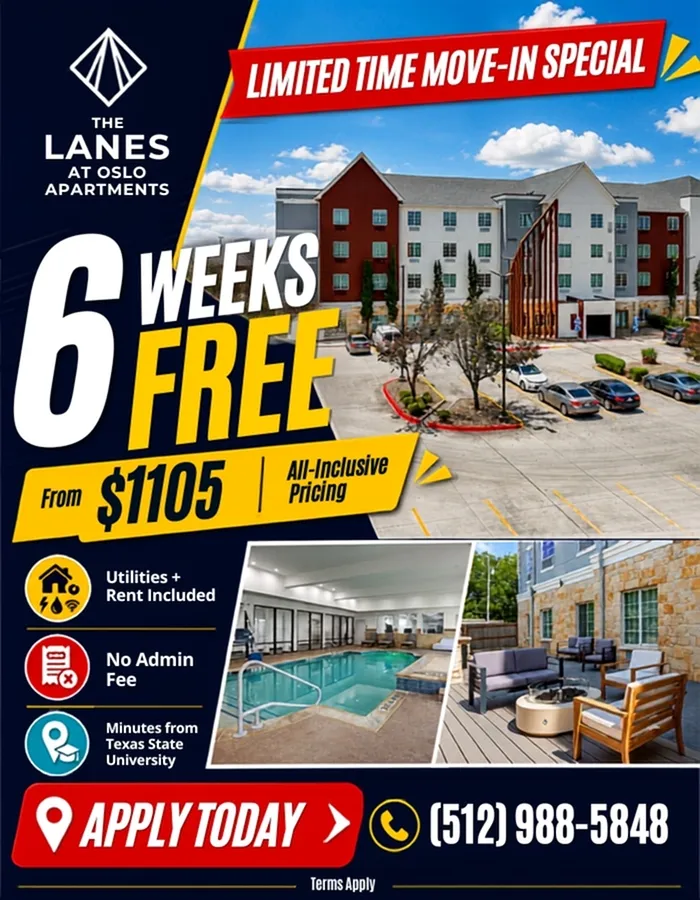
The Lanes at Oslo keeps the mix short on purpose: bowling alley, fitness center, swimming pool, 24-hour package locker system, controlled access entry, outdoor pet park, elevator and Wi-Fi in common areas. Inside, apartments include a washer and dryer in unit, high-speed internet availability and 24-hour emergency maintenance, with furnished layouts offered in select units only. You can see the full community and apartment amenity list or compare layouts on the studio and one bedroom floor plans page.
Frequently Asked Questions
1. What are the top apartment amenities renters actually use?
The short list stays consistent across markets and age groups:
- In-unit washer and dryer
- Reliable high-speed internet
- Secure 24-hour package lockers
- An on-site fitness center within walking distance
- Controlled access entry and responsive maintenance
2. Do apartment perks like a pool or bowling alley really get used?
Yes, though differently than daily features. Social amenities get used in bursts: weekends, holidays, when friends visit, during a long Texas summer. They rarely justify a large rent premium by themselves, but they cost nothing extra to enjoy once you live there, which is the point.
3. Is a fitness center among the building amenities worth paying for?
If you would otherwise buy a gym membership, usually yes. A fitness room two minutes from your door removes the drive that kills most routines. If you already have a campus recreation membership or prefer running outdoors, treat it as a bonus rather than a reason to pay more.
4. How should I judge a list of apartment amenities during a tour?
Walk the distance yourself. Time how long it takes to reach the gym, the mail area and the parking spot from the actual unit, then ask what hours each space is open. Amenities in apartments live or die on access, and access is easy to verify in person.
5. What community amenities matter most for students?
Study-friendly internet, laundry in the unit, secure package delivery and a safe entry system. Students keep unusual hours, so anything locked to office hours loses most of its value. Proximity to campus and transit generally outranks the amenity list itself.
Conclusion
Amenities that actually get used share one trait: they shorten the distance between a need and its solution. Laundry down the hall instead of across town. A package waiting in a locker instead of a redelivery slip. A treadmill you can reach in flip-flops. Everything else is a pleasant extra, and pleasant extras are worth having as long as you are not paying a premium for them.
If you are comparing communities in San Marcos, walk the property before you compare feature lists. Take the photo gallery and virtual tour first, then reach out to the leasing team to schedule a walkthrough and see which amenities fit the way you actually live.