Quick Answer: 24-Hour Package Lockers are secure, self-service compartments where carriers drop off deliveries and residents collect them with a one-time code, at any hour. They matter because a package locked in a compartment is no longer sitting at a door, and pickup no longer depends on leasing office hours.
24-Hour Package Lockers have moved from a nice extra to something renters ask about on the first tour. The reason is simple: more of what we buy now arrives in a box. At The Lanes at Oslo in San Marcos, TX, a 24-hour package locker system is part of the community amenity list, so this guide explains how these lockers work and what they actually solve.
Short version? Less worry, fewer missed deliveries.
What Are 24-Hour Package Lockers?
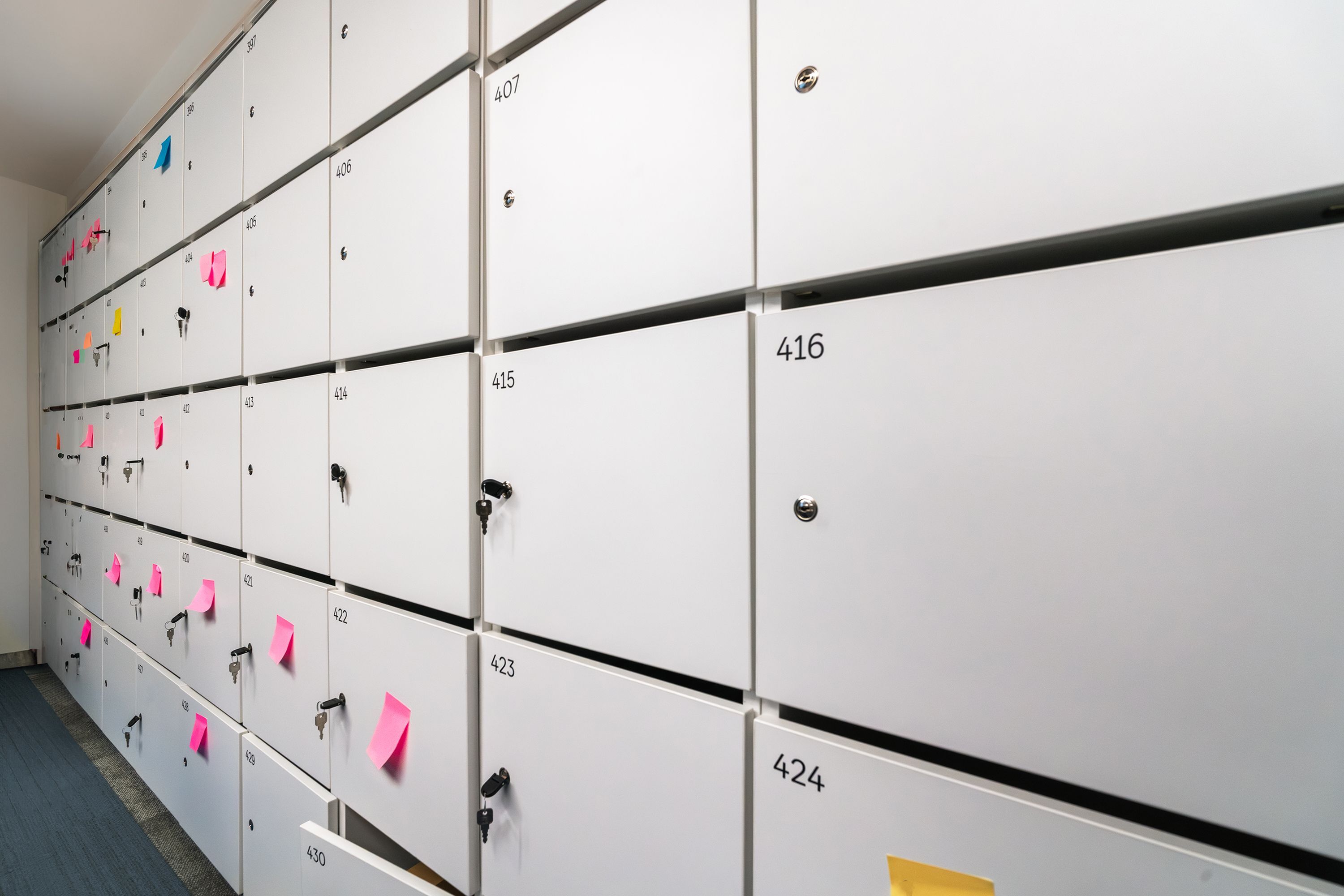
They are a bank of locked steel compartments, usually placed in a lobby, mail area, or near a building entrance, that accept deliveries from carriers and release each one only to the resident it belongs to. Access runs around the clock, so a package that lands at 2 p.m. can be collected at 11 p.m. without anyone from the office involved.
How Automated Package Lockers Differ From a Mailroom
A traditional mailroom depends on people. Someone has to accept the box, log it, store it, and hand it over during business hours. Automated package lockers replace each of those steps with software: the system assigns a compartment, records the drop-off, notifies the resident, and logs the pickup. Nothing waits on a staffed desk.
That difference shows up most for students and shift workers, whose free hours rarely match a 9-to-5 office schedule.
Where Package Lockers Fit Among Apartment Amenities
Pools and fitness centers get the photos, but package lockers are one of the apartment amenities residents use most often, sometimes several times a week. When you compare communities, treat package handling as a practical question, the same way you'd ask about parking or laundry. You can see the rest of the property in the photo gallery and virtual tour.
How Do Apartment Package Lockers Work?
Apartment package lockers work in four steps: a carrier signs in at the kiosk and places the delivery in an open compartment, the door locks, the system sends the resident a notification with a unique code, and the resident enters or scans that code to open the correct door. The whole pickup usually takes under a minute.
Here is the typical sequence in more detail. Exact steps vary by manufacturer, so treat this as the general pattern rather than a description of any one brand.
- Carrier drop-off. The driver identifies themselves at the touchscreen, selects the resident, and picks a compartment size that fits the box.
- Secure storage. The door closes and locks. The package is now out of sight and out of the weather.
- Notification. The resident gets a text, email, or app alert with a one-time PIN or QR code.
- Pickup. The resident enters the code at the kiosk and the matching door pops open.
What an Apartment Parcel Locker Records
Each apartment parcel locker transaction leaves a time-stamped record: when the carrier delivered, which compartment was used, and when the door was opened for pickup. That record is useful if a delivery ever goes missing, because it shows whether the package reached the building at all. Many systems also place a camera at the kiosk.
Limits of a Package Locker System
No package locker system is perfect, and it's fair to say so. Compartments are a fixed size, so furniture, a TV, or a large pet food order may not fit. Lockers can also fill up during peak weeks like move-in and the winter holidays, and most communities expect packages to be collected within a set number of days. Ask the leasing team how oversized and overflow deliveries are handled before you sign.
Why Do Delivery Lockers Matter for Package Theft Prevention?
Delivery lockers matter because most stolen packages are taken from an unattended spot after the carrier has left. A locked compartment that opens only with the recipient's code removes that window. Lockers also protect against rain and heat, and they end the cycle of missed-delivery slips and trips to a carrier facility.
The numbers behind the problem are large. In a May 2025 white paper, the USPS Office of Inspector General estimated that at least 58 million packages were stolen in the United States in 2024. The same report is candid about a caveat: theft reporting is fragmented across retailers, carriers, and police, so the true figure is hard to pin down.
Meanwhile, delivery volume keeps climbing. According to the U.S. Census Bureau's quarterly e-commerce report, online sales reached $340.2 billion in the second quarter of 2026, about 17.1 percent of total retail sales on a seasonally adjusted basis. More boxes at more doors means more opportunity.
The U.S. Postal Inspection Service keeps its advice simple in its mail theft prevention tips: pick up mail and packages promptly and don't leave them sitting out. A locker handles the first half of that for you. Good package theft prevention still depends on collecting your items within a reasonable time.
How Delivery Options Compare in a Parcel Locker Apartment Community
If you are weighing a parcel locker apartment community against one without lockers, this is how the common delivery setups compare.
| Delivery option | Pickup hours | Who can reach the package | Main tradeoff |
|---|---|---|---|
| Left at the apartment door | Any time | Anyone walking past | Highest exposure to theft and weather |
| Held at the leasing office | Office hours only | Office staff | Hard to reach after class or a late shift |
| Shared package room | Often extended or 24 hours | Any resident with room access | Packages sit together on open shelves |
| 24-hour package lockers | Any time | Only the resident with the code | Oversized items may not fit |
Frequently Asked Questions
Are package lockers safe?
Package lockers are one of the more secure ways to receive deliveries at an apartment. Each compartment stays locked until the resident's unique code is entered, and the system logs every drop-off and pickup. No method removes all risk, so collect packages promptly and never share your pickup code.
How do I get my package out of an apartment locker?
You'll receive a text, email, or app notification once a carrier delivers. That message contains a one-time PIN or QR code. Go to the locker kiosk, enter or scan the code, and the door holding your package opens automatically. Close the door when you're done.
What should I ask about package lockers on an apartment tour?
- Which carriers deliver to the lockers?
- How are oversized packages handled?
- How long can a package stay before it must be picked up?
- Is there a fee to use the system?
- Where are the lockers located, and is the area well lit?
What happens if the lockers are full?
It depends on the community. Some carriers retry the next day, some leave packages with the office, and some systems send reminders so residents clear compartments sooner. Peak weeks are the usual pressure point. Ask your leasing team about their overflow process so you know what to expect.
What should I do if a package is stolen anyway?
Contact the retailer and the carrier first, since many will refund or replace the item. If the package was sent through the U.S. Mail, you can also file a report with the U.S. Postal Inspection Service. Let your leasing office know as well, because locker records can help confirm delivery.
Conclusion
Online shopping isn't slowing down, and neither is the need for a safe place to receive it. A locker bank that opens at any hour, for the right person only, solves a daily problem without asking residents to change their routine. It won't fit every oversized box. It does cover the large majority of everyday deliveries.
The Lanes at Oslo lists a 24-hour package locker system alongside controlled access entry, just off I-35 in San Marcos. Take a look at the studio and one-bedroom floor plans, check the map and neighborhood page, then contact the leasing team to ask how 24-Hour Package Lockers work at the community and to schedule a tour.